Journal

Funding Rates

1 article tagged Funding Rates.

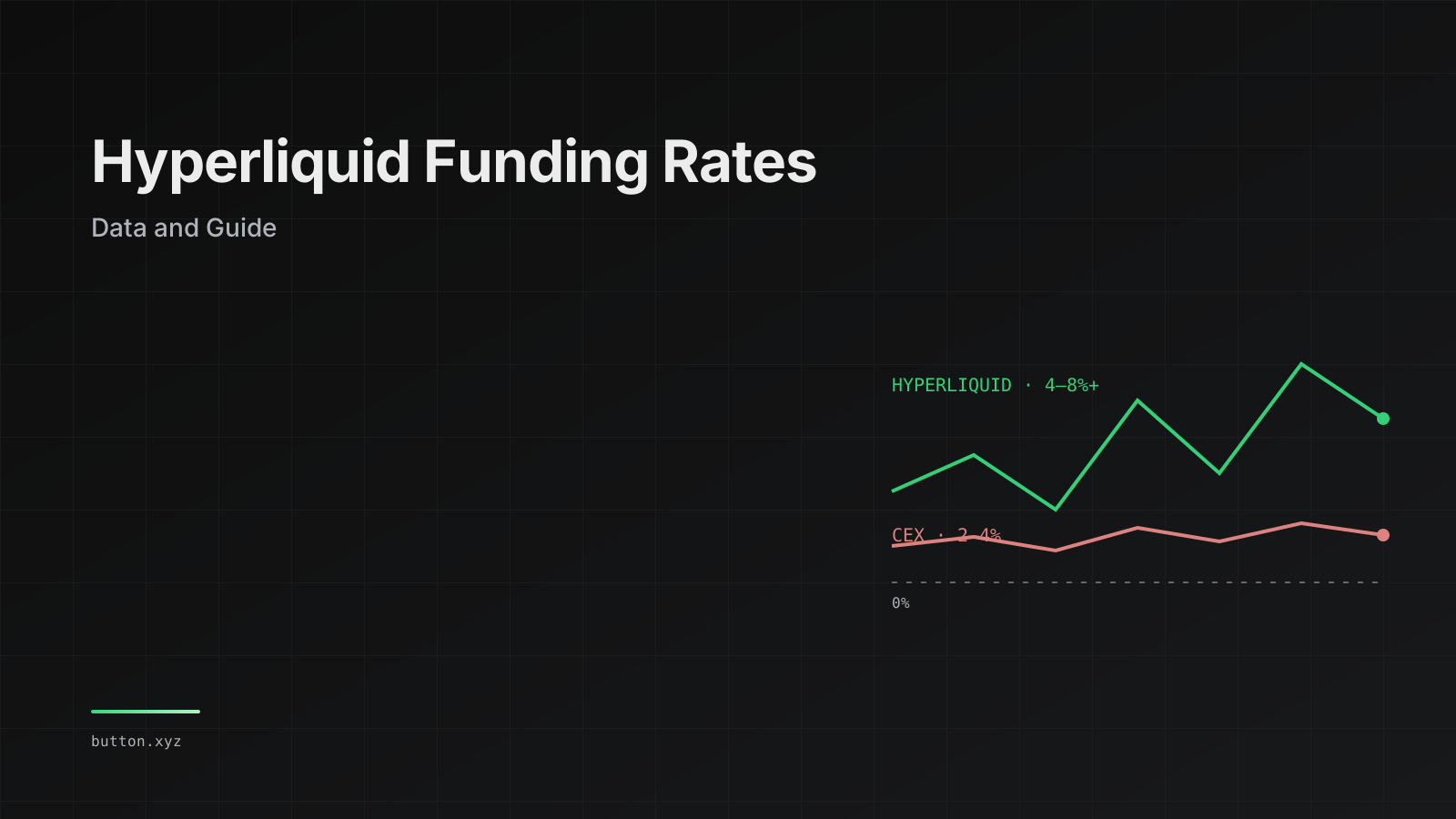
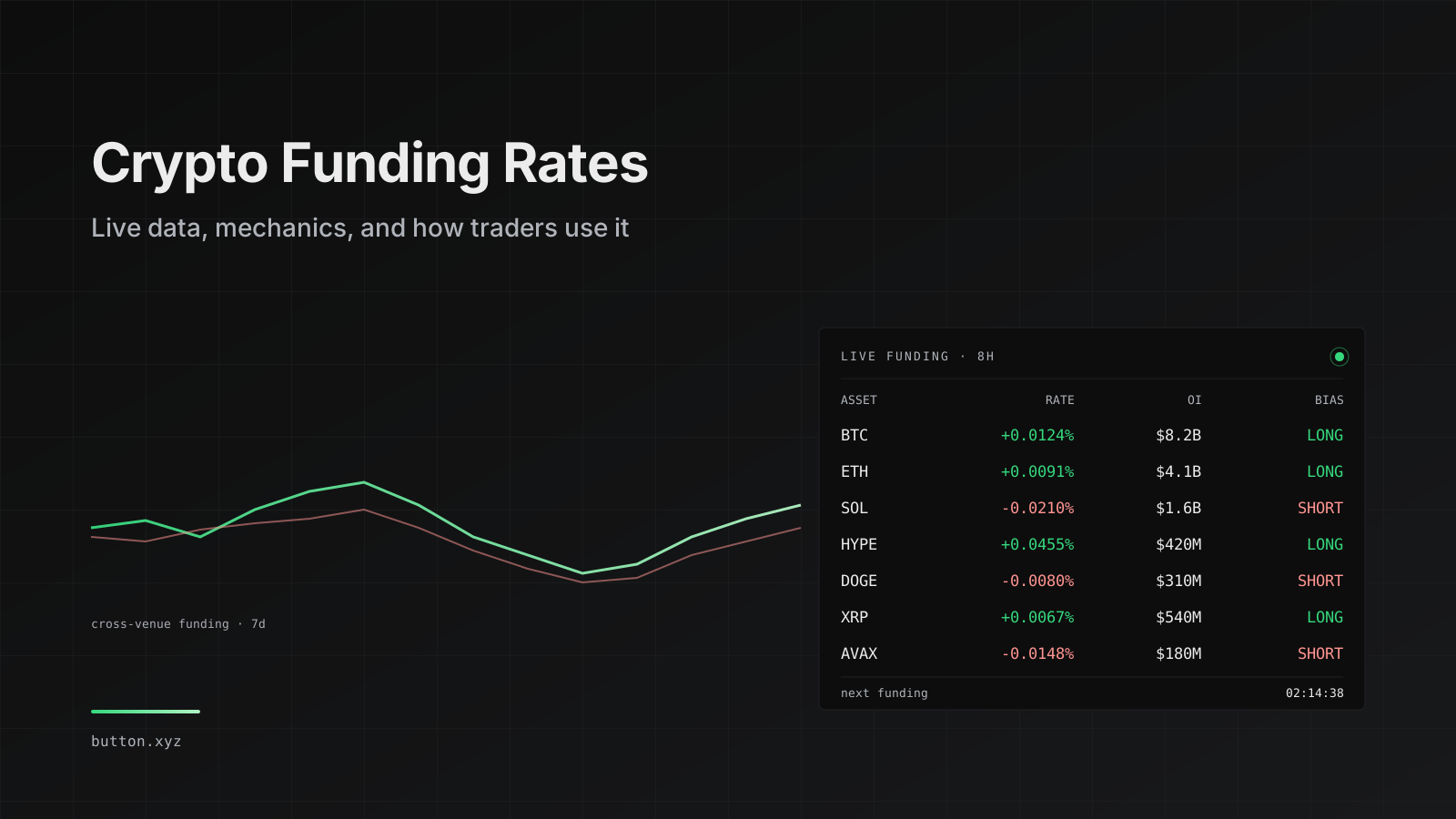
Funding rates are the periodic payments that perpetual futures use to stay anchored to the underlying spot price — positive when longs are paying shorts, negative when shorts are paying longs, and one of the cleanest crowd-positioning signals in crypto trading. On Hyperliquid, funding is charged hourly and is visible on-chain, which makes it useful for both directional traders and basis arbitrageurs.

The Funding Rates archive on the Button blog sits inside a broader effort to explain how the on-chain perpetual futures market actually behaves day to day on Hyperliquid. Most Funding Rates pieces touch the same underlying mechanics — funding accrued hourly between longs and shorts, basis between the perpetual and its underlying spot or index, maintenance margin and the liquidation engine that enforces it, and the way deep on-chain order books absorb size differently from off-chain matching engines. Reading Funding Rates posts alongside the rest of the blog is how the picture comes together: each tag is a different lens on the same set of markets that Button routes orders into, from BTC and ETH on Hyperliquid to the S&P 500, NVDA, gold, and EUR/USD on trade.xyz. The team writing here is the same team building the product, so the perspective is closer to the order book than to abstract market commentary.

Posts tagged Funding Rates on the Button blog explain how funding works mechanically, how to read funding extremes, where funding arbitrage shows up across venues, and how Button surfaces live funding on every market so you can size a position with the carry cost already on the table.

Button is a discretionary trading interface for perpetual futures, routing orders into Hyperliquid’s fully on-chain order book and into trade.xyz for real-world asset perps. The blog is written by the same team building the product, and the Funding Rates archive sits alongside our other writing on Hyperliquid market structure, perpetual futures mechanics, and long-form research into where on-chain liquidity is actually forming. If you came in from search, the fastest way to see what Button does is to browse the full list of markets we route into — 210+ assets across crypto, equity indices, single-name stocks, commodities, and FX, all USDC-margined and settled on-chain.

Every post on this page links back to live markets where relevant. If a piece references the BTC perp, the funding rate regime on ETH, or a basis trade on the S&P 500, the underlying market is a click away — with current mark price, funding rate, open-interest cap, and maximum leverage already on the page. The intent is that reading and trading live in the same place, rather than in two separate tabs.

If you are new to Hyperliquid and on-chain perpetual futures, the path is short. Connect a wallet that holds USDC on a supported network, bridge to Hyperliquid, and you have margin — there is no Button account to open, no centralised custodian holding your collateral, and no KYC at the protocol layer. From there, every market on Button uses the same workflow: pick a direction, choose leverage within the per-market cap, set an entry, and watch the live liquidation price update as the position fills. Funding is charged hourly on Hyperliquid and is visible on every market page before you commit. Reading the Funding Rates archive alongside the live market view is the fastest way to build intuition for how these markets actually behave.

A practical note on how to read this archive. Button’s writing is opinionated. We do not publish neutral overviews of every venue or every market — we write about what we think is worth a discretionary trader’s time, often with charts and worked examples, and we are willing to say which venues, tools, and strategies we think are honestly better. Where a piece is a head-to-head review, we have skin in the game on at least one side of the comparison; that is disclosed in the article. Where a piece is a guide, it is written by the same team that built the relevant part of the product. The Funding Rates tag groups everything that fits that subject, regardless of format, so you can read across a topic rather than across a single piece.

Most posts in this archive are written with specific live markets in mind. The deepest crypto perpetuals are BTC and ETH on Hyperliquid, where funding regimes are long-running and the order book is deep enough for serious position sizing. Mid-cap alts like SOL, AVAX, and SUI trade with different dynamics — funding is more reactive, basis is wider, and positioning shifts faster. On the real-world asset side, the S&P 500, NVDA, TSLA, and gold let crypto-native traders take leveraged exposure to traditional markets through the same wallet, without opening a brokerage. The full market list is on the trade page; pieces in this tag often reference those markets directly.

If you want to follow new pieces under the Funding Rates tag and the rest of the Button blog, the RSS feed at /feed.xml covers everything we publish, and team announcements are posted on @buttonxyz on X. We do not run an email list — the blog and the social accounts are the two places to follow along.

One closing note specific to this archive. Search traffic finds the Funding Rates tag from a wide range of queries, and not every reader who lands here is already familiar with Button. If that is you: Button is a discretionary perpetual futures trading interface that routes orders into Hyperliquid and trade.xyz. We do not custody collateral, do not gate access behind KYC at the protocol layer, and do not charge a platform markup on top of the standard venue maker/taker fees. Every market on the product surface is USDC-margined and settled on-chain. The fastest way to see what that means in practice is to open the market list — the writing here is much easier to follow with a live order book in another tab.