What Is Agentic Trading? A Plain-English Guide for Investors
Agentic trading lets an AI agent place trades for you. Here's how it works, whether it's safe, what it costs, and how to start — explained for everyday investors.
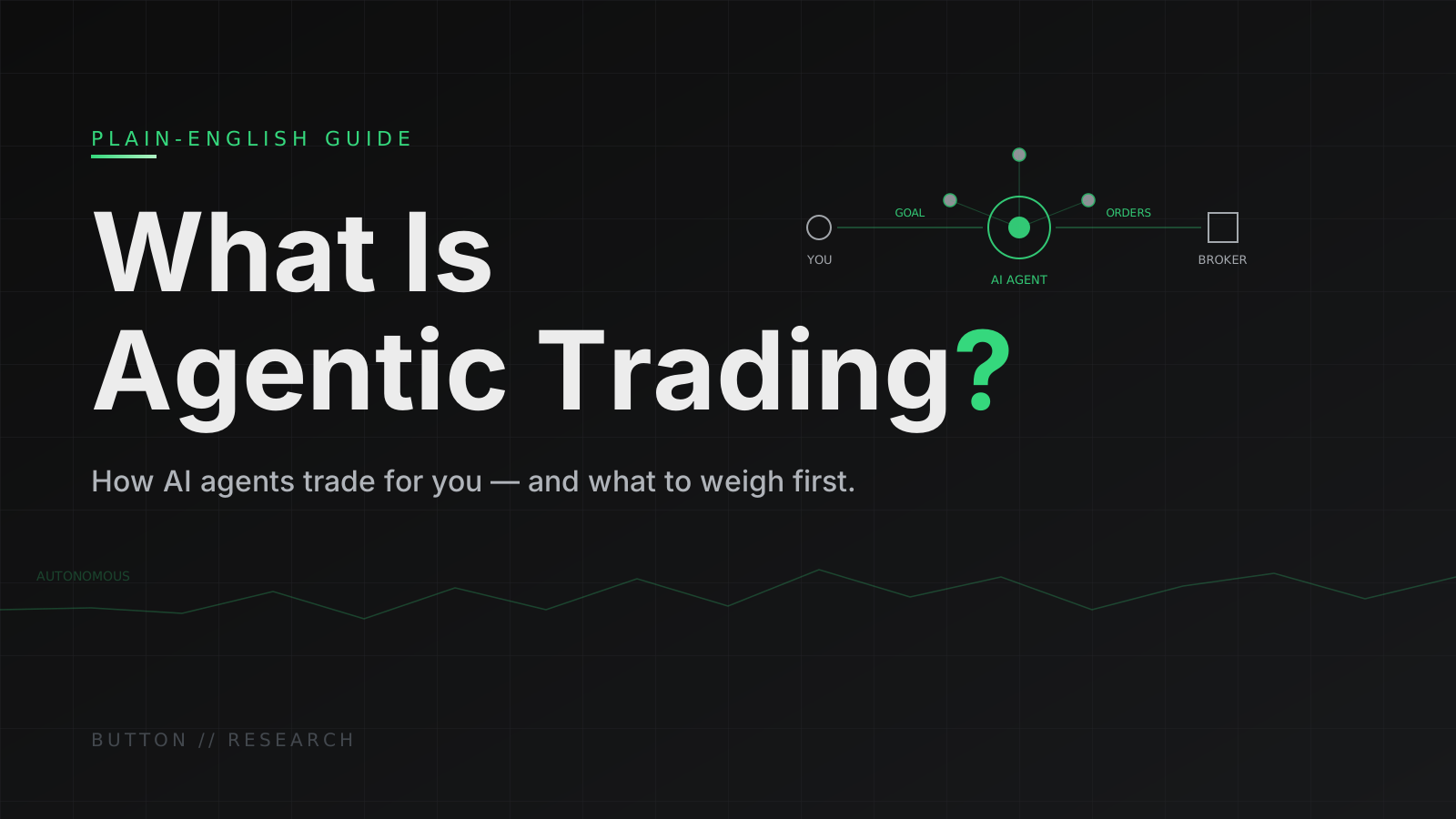
Until recently, "letting a computer trade for you" meant one of two things: a rigid algorithm following if-this-then-that rules, or handing your money to a robo-advisor that quietly rebalanced a basket of funds. Agentic trading is something new. It lets you connect an AI agent — the same kind of reasoning model behind tools like ChatGPT or Claude — to a brokerage account and have it analyze the market and place trades on your behalf, based on goals you describe in plain language.
In 2026 this jumped from research labs to mainstream apps. Robinhood, Public, and several crypto exchanges now let everyday investors plug an AI agent into a real account. This guide explains what agentic trading actually is, how it works, whether it's safe, and what to weigh before trying it.
The short version: Agentic trading is a brokerage feature that connects an autonomous AI agent to a dedicated account so it can make and execute investing decisions for you, within limits you set. It's powerful, genuinely new, and carries real risk — including the possibility of losing your entire investment.
Agentic trading, defined
Agentic trading refers to a setup where an autonomous (or semi-autonomous) AI agent participates in investing decisions and order execution in ways that meaningfully affect your account — not just suggesting ideas, but actually placing the trades.
The key word is agent. A traditional trading bot follows fixed rules a human wrote in advance. An AI agent, by contrast, can reason about new information, remember context across a session, and use tools (market data feeds, your brokerage's order system) to decide and act. You give it a goal in everyday language — "rebalance my portfolio toward AI stocks but never put more than $2,000 into any one position" — and the agent figures out the steps.
In practice, most retail agentic trading works like this: you open or designate a dedicated account, fund it with a budget you're comfortable putting at risk, connect a third-party AI agent through a secure link, and let the agent monitor markets and trade within your constraints — while you keep the ability to watch every trade and shut it off instantly.
How AI trading agents work
It helps to think of an agentic trading system as a small team of specialists rather than one monolithic program. Most are built from several cooperating agents:
A data agent continuously ingests real-time market data, news, and other signals and turns them into context the rest of the system can use. A strategy agent interprets that context, forms a view, and generates trade ideas — for example, deciding that a theme is gaining momentum and proposing a position. An execution agent then routes the actual orders to the brokerage, managing details like timing and slippage so the trade is filled efficiently.
What makes this "agentic" rather than just automated is that the strategy layer is typically powered by a large language model that can reason over messy, unstructured information — earnings transcripts, headlines, filings — rather than only crunching pre-defined numeric signals. Some agents act as traders that output direct buy/hold/sell decisions; others act as alpha miners that hunt for new predictive patterns to feed a strategy.
The connection between the agent and your brokerage usually runs over a standardized, permissioned link (you'll sometimes see this called the Model Context Protocol, or MCP). That link is what gives you the safety controls: a defined budget, real-time alerts on each trade, and the ability to disconnect at any moment. For a deeper look at how these systems reason and act, see AI Trading Agents: What They Are and How to Deploy One.
How agentic trading differs from what came before
It's easy to lump agentic trading in with older automation, but the distinctions matter.
Compared with traditional algorithmic trading, agentic trading is far more flexible. Algo trading executes a fixed strategy a human coded in advance; an AI agent can adapt its reasoning to conditions it wasn't explicitly programmed for. That flexibility is the appeal — and also the source of much of the risk, because the agent's behavior is harder to fully predict. We break this contrast down further in AI Crypto Trading Bots: How They Work and How to Pick One.
Compared with a robo-advisor, agentic trading is much more active and bespoke. A robo-advisor sticks you in a diversified, long-term portfolio and rebalances slowly. An agent can pursue specific, short-term, personalized strategies you describe — which means more potential upside and considerably more potential for things to go wrong.
Compared with copy trading, where you mirror another human's trades, agentic trading hands the decisions to software reasoning on your behalf rather than to another person.
Is agentic trading safe?
This is the most important question, and the honest answer is: it has real guardrails and real, serious risks. Both things are true.
On the safety side, the major platforms build in meaningful controls. You typically trade inside a dedicated account funded with a budget you choose, so the agent can't reach the rest of your money. You get notifications on each executed trade, and a one-tap "kill switch" to disconnect the agent instantly.
But the risks are substantial and you bear them. Agentic trading can lose money, including potentially your entire invested amount. AI-driven strategies can perform poorly in certain market conditions, can move quickly, and can be hard to monitor or stop in the moment. Industry experts have warned that these tools hand retail investors powerful, complex machinery without the information edge or risk controls that professional trading desks have — and that if the agent makes a costly mistake, you're the one on the hook. Many of these products are also brand-new, with little or no public track record of performance to evaluate.
A sensible way to think about it: treat any money you give an agent as risk capital you can afford to lose, start small, keep notifications on, and make sure you understand how to stop it before you start it.
This article is educational and not financial advice. Investing involves risk, and agentic trading involves significant risk including possible total loss. Consider your own circumstances and consult a licensed professional before making decisions.
What it costs and how to get started
Costs vary by platform. Some bundle agentic trading into a paid subscription tier (for example, a premium membership), and some require a minimum balance in the dedicated trading account. Trading commissions, if any, follow the broker's normal schedule.
Getting started generally follows the same arc across platforms: choose a brokerage that offers agentic trading, open or designate the dedicated account, fund it with an amount reserved specifically for the agent, connect your chosen AI agent through the platform's official link, set your constraints (budget, position limits, themes or strategies), turn on trade notifications, and confirm you know where the disconnect button is. From there the agent can analyze markets and place trades, with all activity visible to you in the app.
Frequently asked questions
What does "agentic trading" mean in simple terms?
It means connecting an AI agent to a brokerage account so it can make and place trades for you automatically, based on goals you set — with you able to monitor and stop it at any time.
Is agentic trading the same as a trading bot?
Not quite. A classic bot follows fixed, pre-written rules. An AI agent reasons about new information and adapts, which makes it more flexible but also less predictable. See AI Crypto Trading Bots: How They Work and How to Pick One for the full comparison.
Can an AI agent lose all my money?
Yes. Agentic trading carries significant risk, including the possible loss of your entire investment. That's why platforms let you cap the budget and disconnect instantly.
Do I keep control?
You set the budget and rules, you get alerts on trades, and you can disconnect the agent at any time. But the agent executes trades without asking you to approve each one, so day-to-day control is lighter than trading manually.
Is agentic trading regulated?
It's an emerging area and the regulatory picture is still developing. Treat any platform's claims carefully and read the disclosures.