From Fringe to Finance: Bitcoin's Transition into a Mainstream Investment Vehicle, Part II
A deeper dive into the data around Bitcoin's transformation into a mainstream asset.

Continuing from the previous discussion: speculation is easy, but the real test is in the data. Do the empirical results align with our lived experience? Let's dig into it.
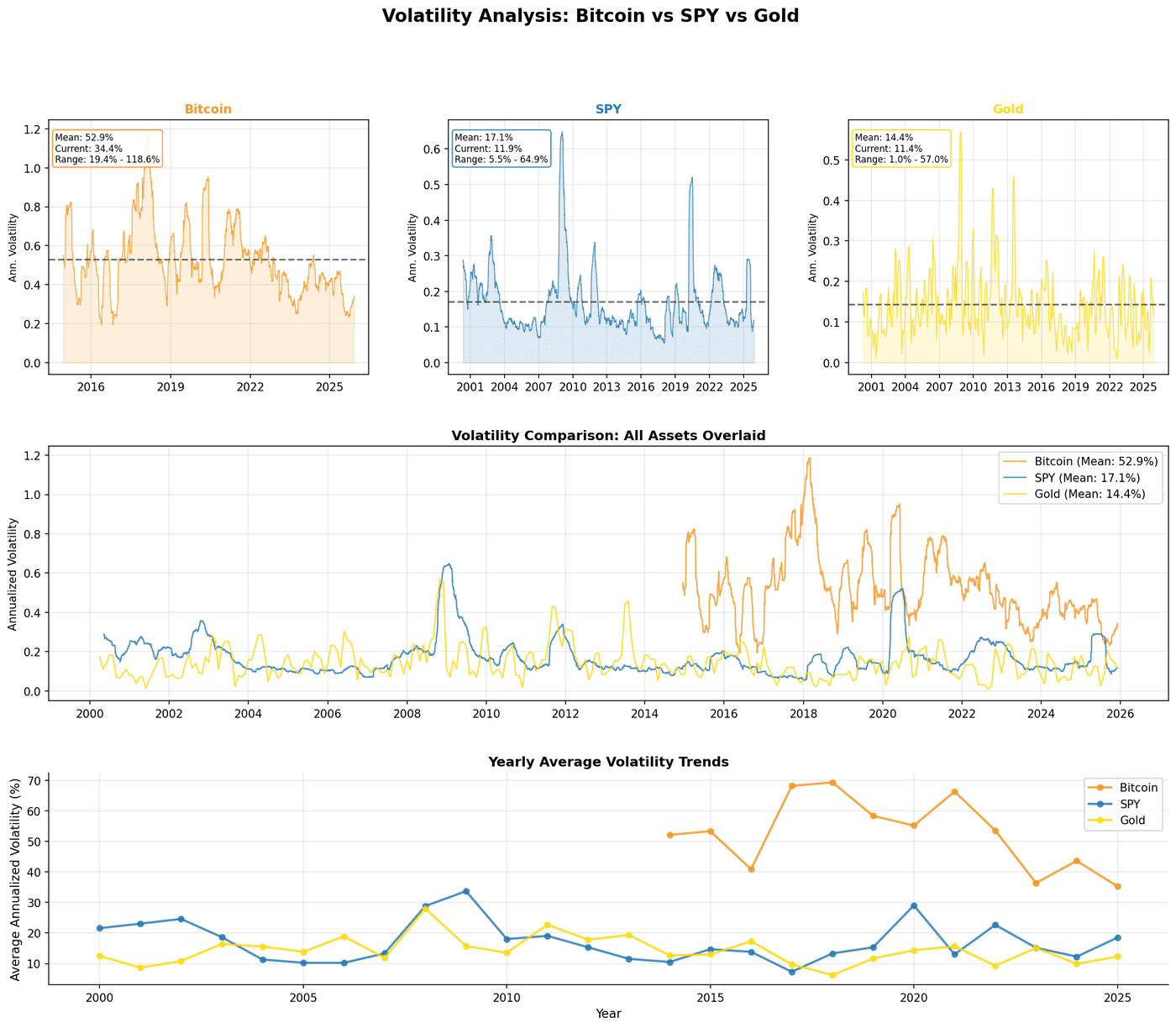
The chart below compares BTC, SPY, and Gold. It's easy to see the volatility gap narrowing between BTC and other traditional assets.
1. Declining Volatility Over Time
- Historical Trend: BTC's volatility has generally decreased over multi-year cycles, especially after the first ETF started trading.
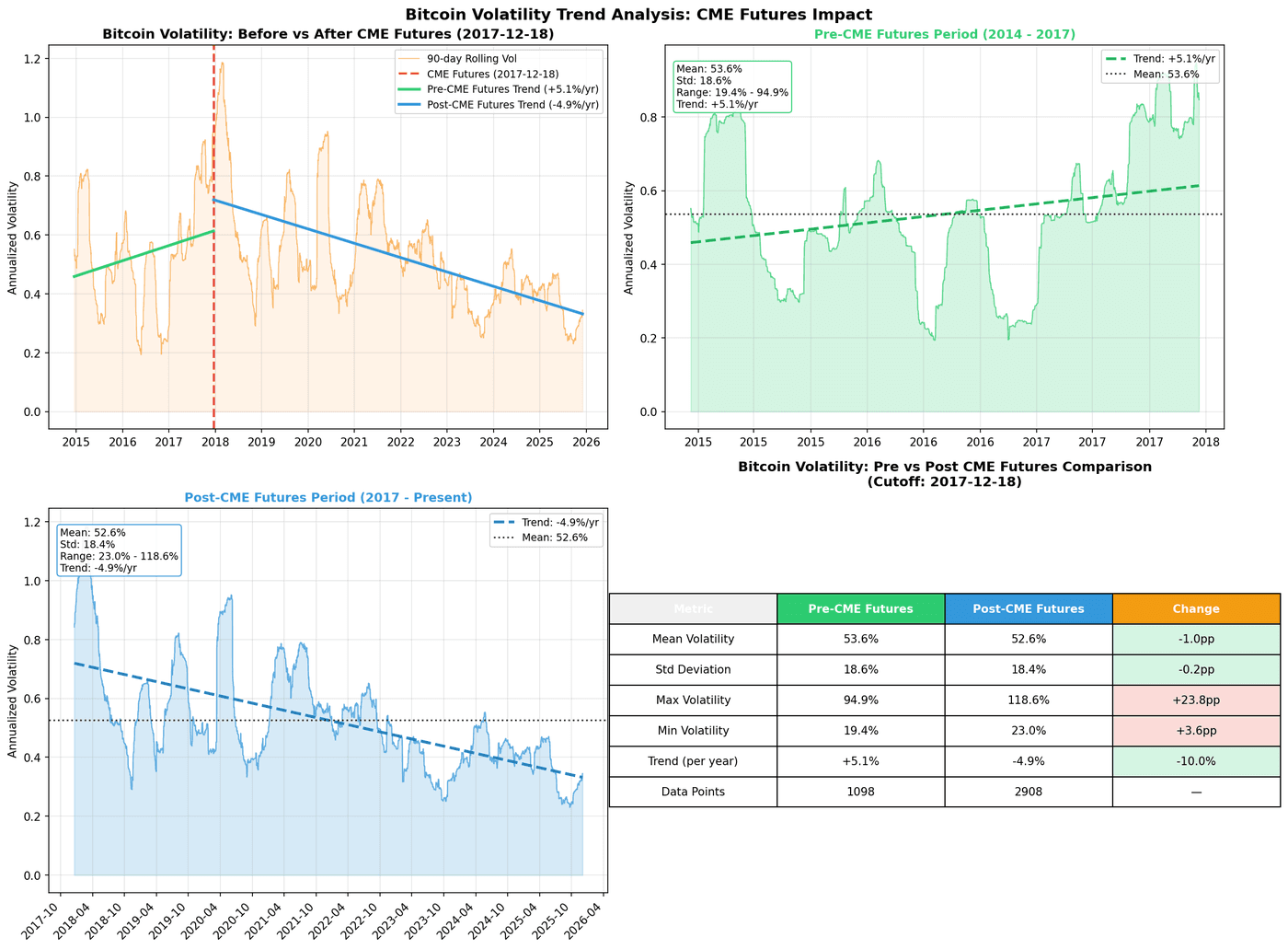
- Why It Matters: Lower volatility makes BTC more palatable for institutional investors, treasury allocations, and even ETF inclusion. The vol dropped after CME futures became available.
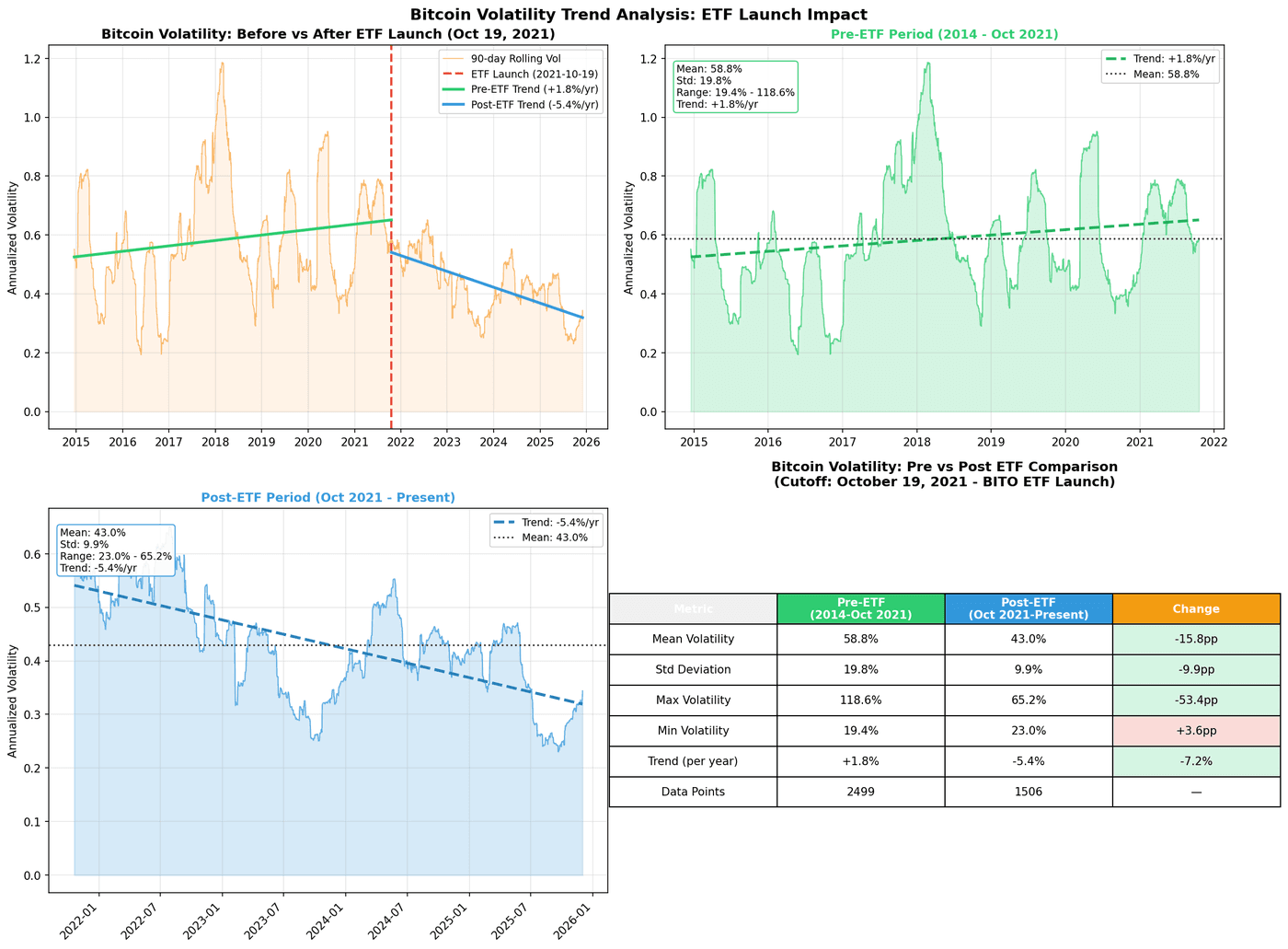
The further vol drop after ETF availability.
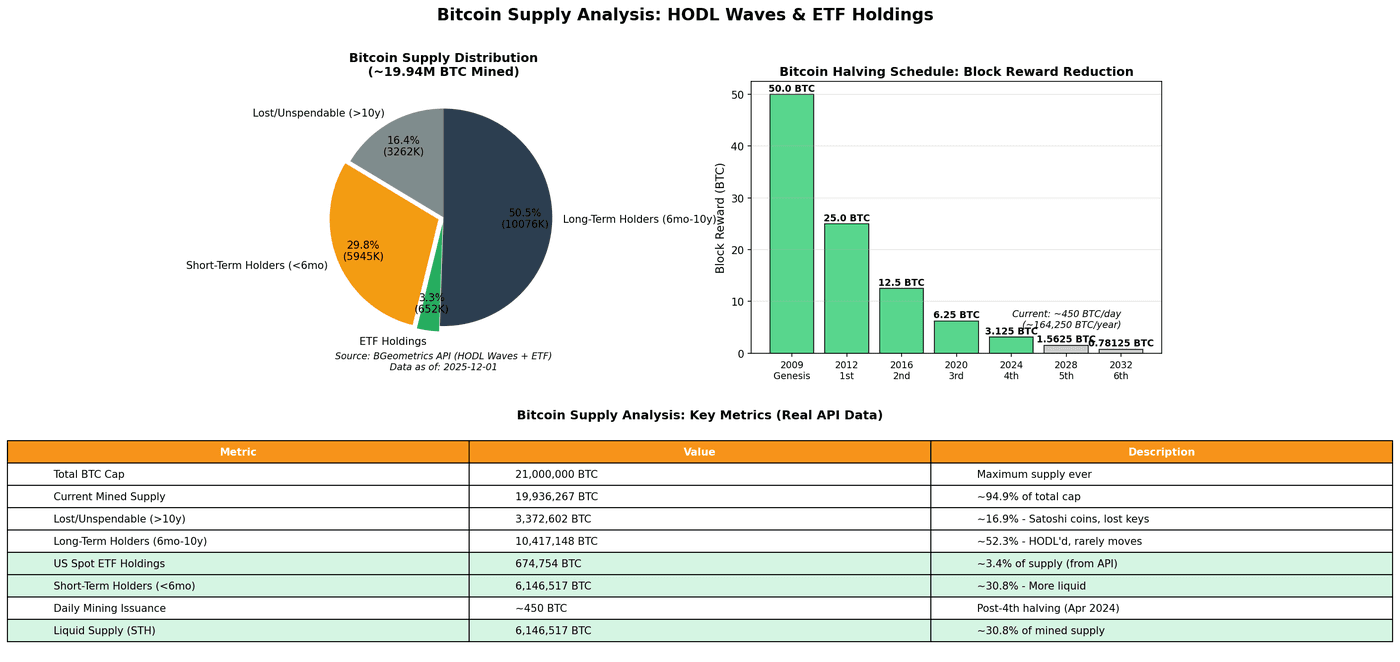
2. Reduced Liquid Supply
- HODLing Behavior: On-chain data shows a growing share of BTC hasn't moved in over one year — held long-term by institutions, whales, or lost wallets.
3. Institutional Adoption & Financialization
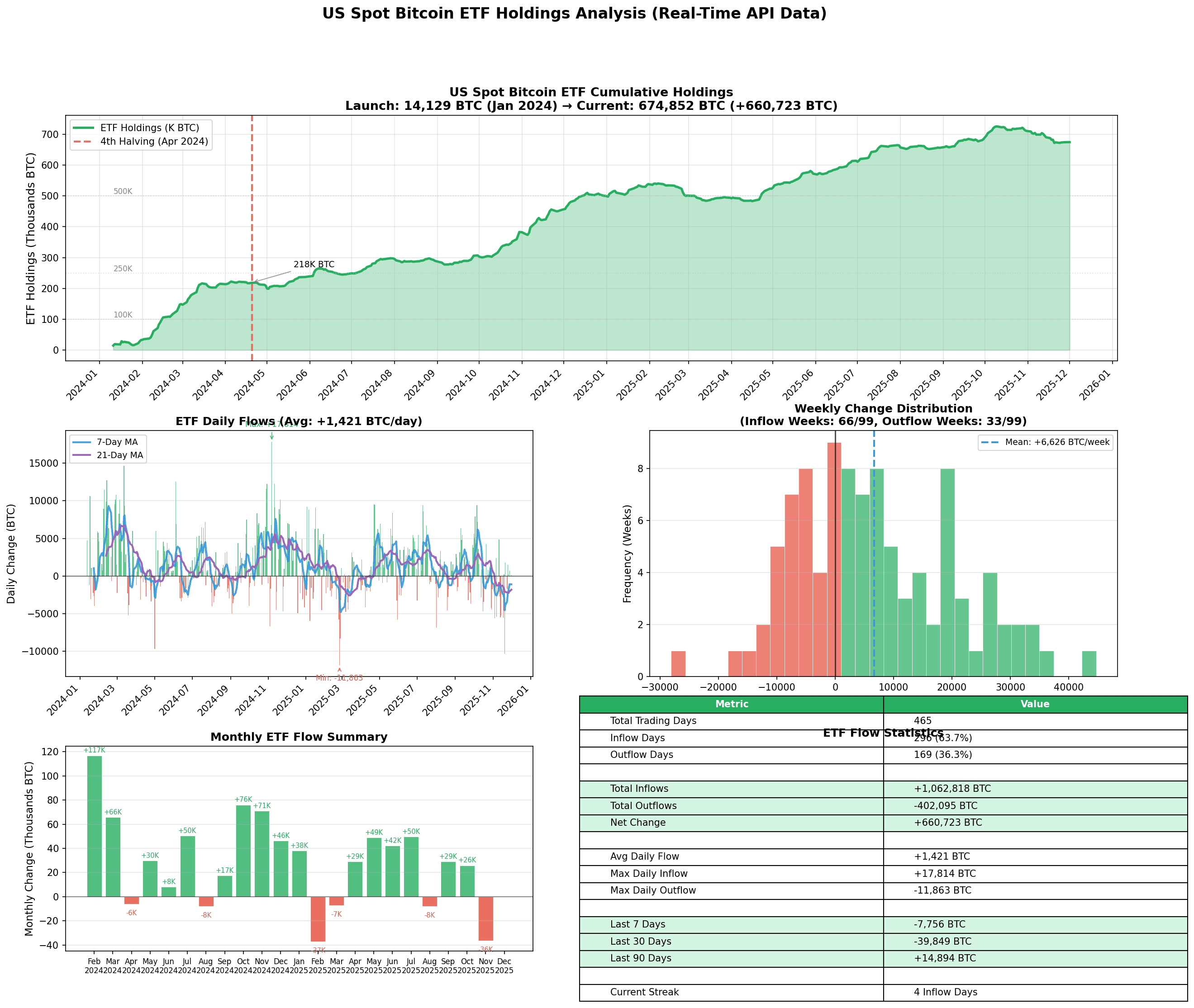
- Spot Bitcoin ETFs: Approved in January 2024, bringing legitimization and easier access for TradFi.
- January 2024: The SEC approved 11 spot Bitcoin ETFs.
- May 2024: The SEC approved eight Ethereum ETFs.
- January 2023: HKEX listed 3 crypto ETFs.
- Corporate Treasuries: Companies like MicroStrategy and others hold BTC as a reserve asset.
- Custody Solutions: Fidelity, BlackRock, Coinbase Custody, and others now offer regulated BTC custody.
4. Regulatory Clarity
While still fragmented globally, major jurisdictions (U.S., EU, UK, UAE, Singapore) are establishing clearer crypto frameworks.
- Guiding and Establishing National Innovation for US Stablecoins Act
- Digital Asset Market Clarity Act
The U.S. treating BTC differently from most altcoins helps its mainstream perception.
5. Integration into Traditional Finance Infrastructure
- Futures & Options Markets: Deep liquidity in CME Bitcoin futures.
- Collateral Use: BTC accepted as collateral by banks (e.g., SEBA, Sygnum) and DeFi protocols.
- Wealth Management Platforms: eToro, Robinhood, and even private banks now offer BTC exposure.